Templates · Knowledge cards
Knowledge Card Templates
A knowledge card takes one body of reading — a book, a chapter, a paper, a term's notes — and compresses it into a single image you can revise from. Below are seven finished examples, each generated from real source text, and each one reusable with your own.
7 knowledge cards, generated and shown in full
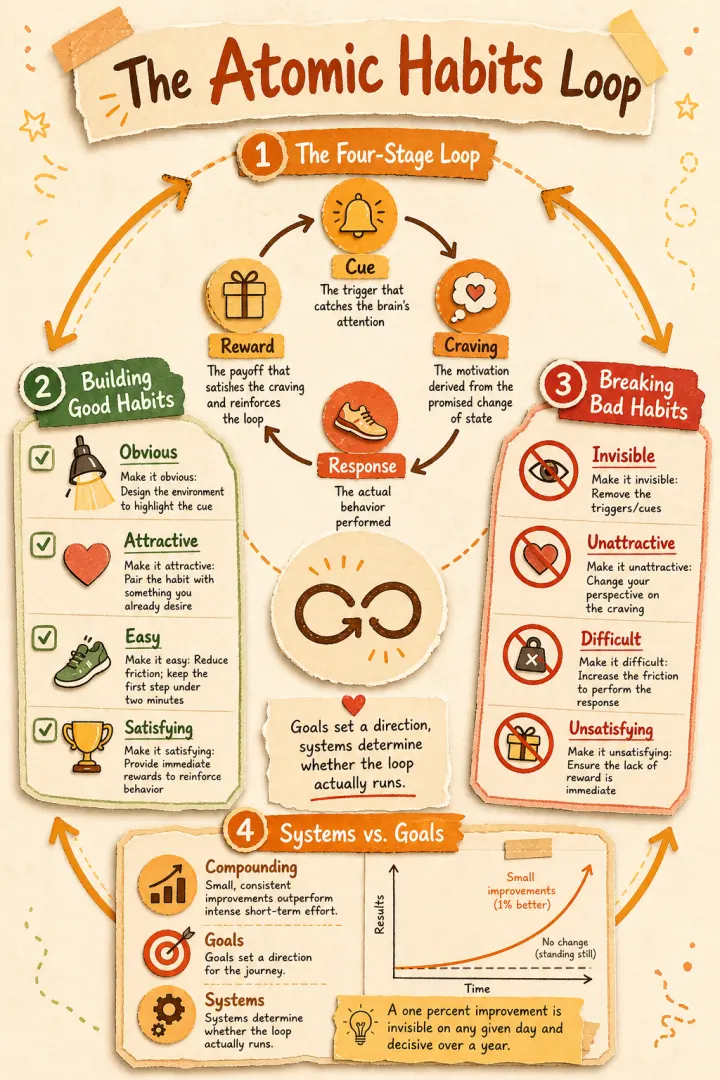
Atomic Habits — the habit loop
The four-stage loop as a closed cycle, with a law attached to each stage.
Use this template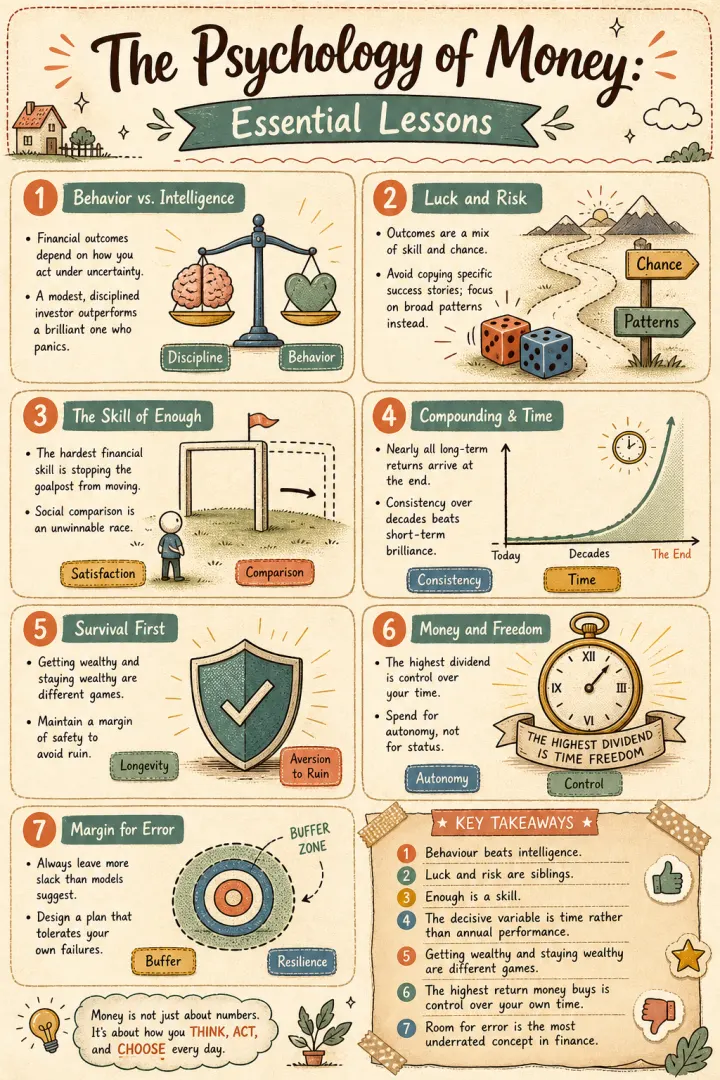
The Psychology of Money — key lessons
Parallel lessons as a modular grid, each tile standing on its own.
Use this template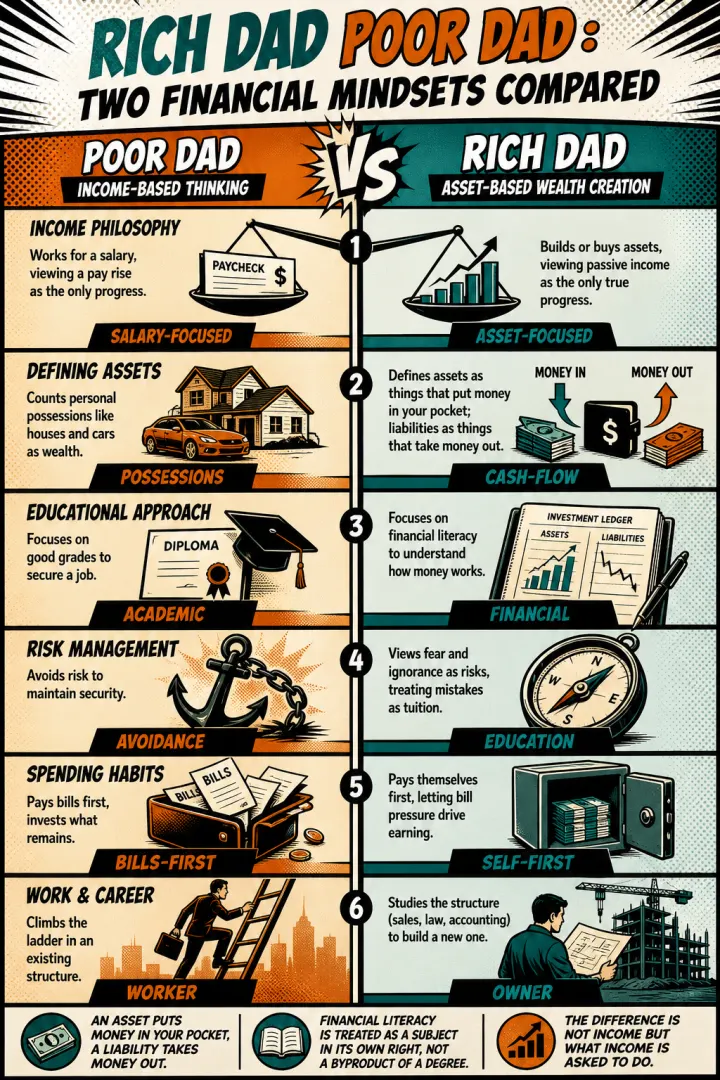
Rich Dad Poor Dad — two mindsets
A two-column contrast — the format the book's whole argument is built on.
Use this template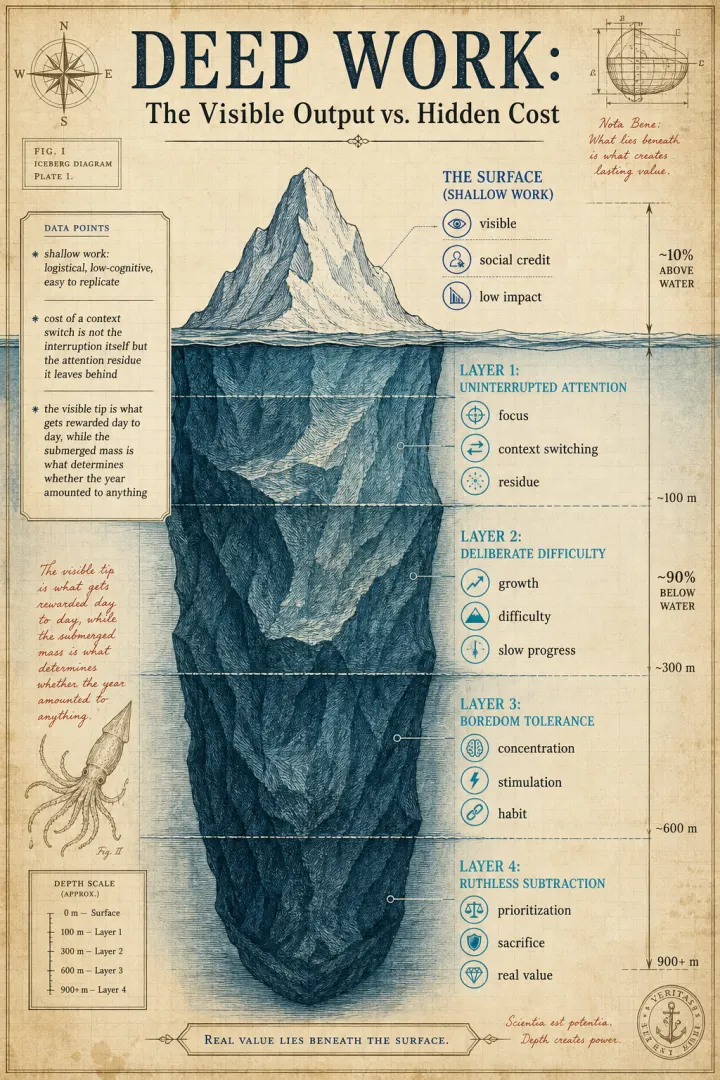
Deep Work — above and below the surface
An iceberg: visible shallow work over the four things that actually produce value.
Use this template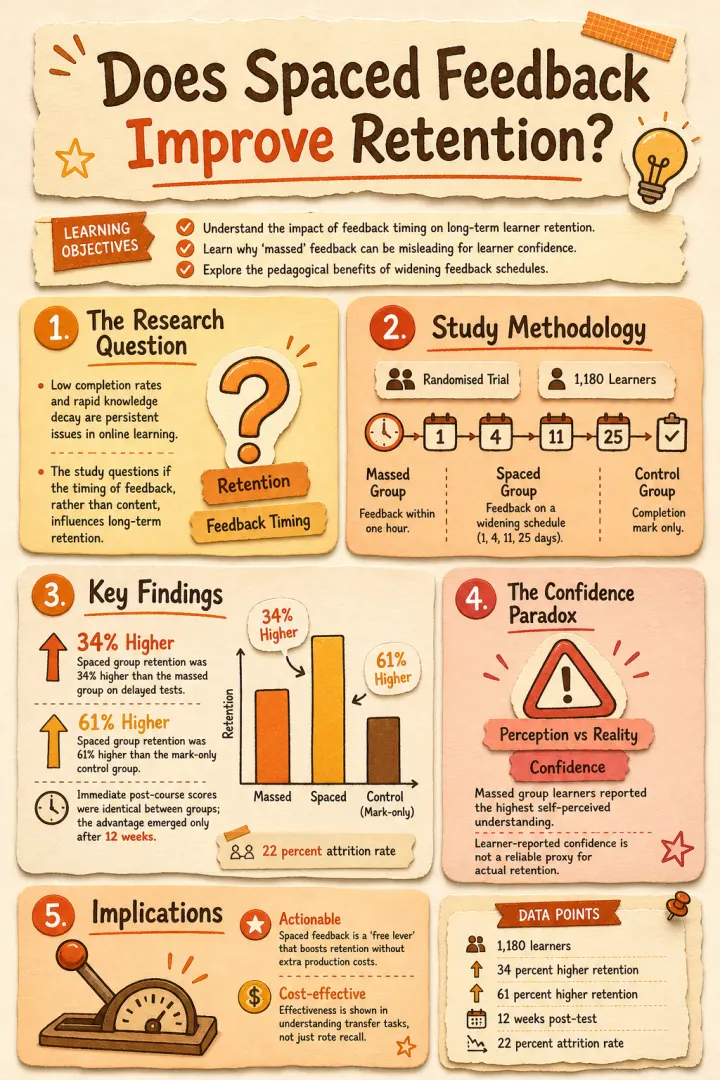
Research paper — question to implication
Question, method, findings and limits, each in its own panel.
Use this template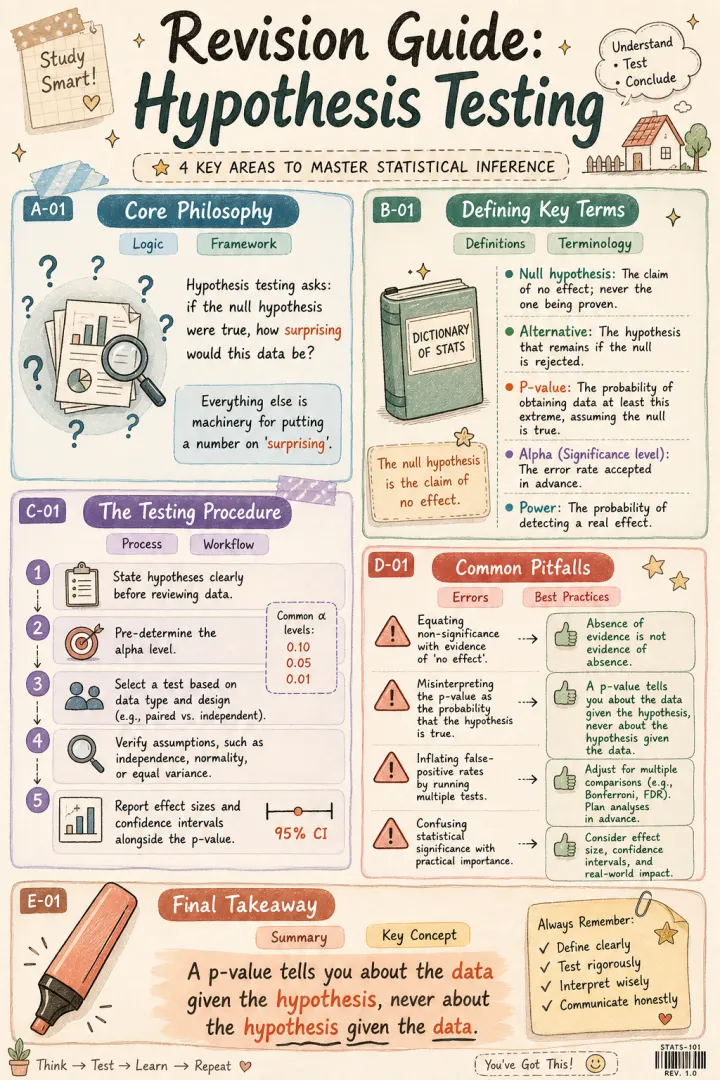
Revision sheet — hypothesis testing
Definitions, procedure and the classic errors, packed into one sheet.
Use this template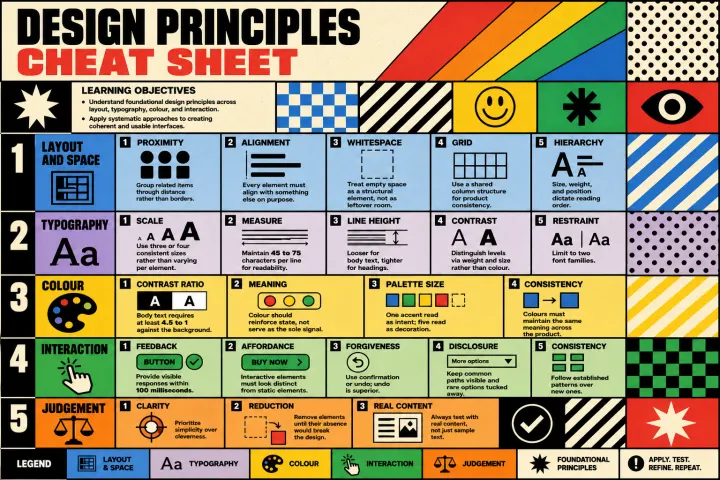
Design principles — grouped cheat sheet
Five groups of principles as a scannable wall of labelled tiles.
Use this templateWhat makes a card worth keeping
The value of a knowledge card is not that it is prettier than notes. It is that making one forces a decision notes let you avoid: which single idea is load-bearing, and what hangs off it. A card with no centre is just a decorated list, and a list is what memory handles worst.
So the useful cards all have a shape you could describe out loud — one mechanism with four factors around it, two mindsets in opposition, a loop that closes, a visible surface over a hidden mass. That shape is the recall handle. Weeks later you remember the structure first and the content second, which is exactly the order you want.
Choosing a structure for what you read
The examples here deliberately use different structures, because the right one follows the argument rather than the subject. Match the shape to the claim and most of the work is done before anything is drawn.
- One idea with several dependent factors → a hub with spokes
- A process where the last step feeds the first → a closed cycle
- Two opposed positions → a two-column contrast
- Visible symptoms over hidden causes → an iceberg
- Several parallel lessons with no order → a modular grid
- A term's worth of definitions and procedure → a packed one-sheet
- A reference set that falls into groups → a wall of labelled tiles
One card per idea, not per book
The most common mistake is scope. A card covering an entire 300-page book becomes a contents page with illustrations — technically a summary, useless for revision. A card covering one chapter's argument stays revisable.
If a book makes three independent arguments, three cards will serve you better than one crowded diagram, for the same reason a flashcard holding three facts fails as soon as any one of them is shaky. Work chapter by chapter, keep one look across the set, and the collection ends up reading as a deliberate series.
Questions
Questions about knowledge card template
Not in the sense of a file you open and type into. Each one is a worked example, and its button applies the same settings to text you paste — so you get a fresh image built from your content, as a finished PNG rather than an editable canvas.
Yes — that is the point of them. Pick whichever example is closest in shape to what you read, paste your own notes or summary, and generate. The subject changes; the structure carries over.
Your own notes, or a few hundred words summarising the argument, work better than raw excerpts. The card is built from what you supply, so supplying the distilled version gives it a much better starting point.
Yes. Downloads are full-resolution PNGs with no watermark, so they print cleanly at A4 or larger. Portrait is usually the right aspect for a wall or a notebook page.
Elsewhere on Flowgraph
Make one from your own text
Pick the example closest to what you are summarising and paste your content — the recipe comes with it.